
Decoding the Label: What to Look For

How to Actually Read an Olive Oil Label
The olive oil aisle is confusing. Everything says "extra virgin," everything has a picture of an olive branch, and half the bottles look exactly the same. So how do you tell what's actually good?
It's easier than you think. You just have to know which parts of the label matter and which parts are marketing noise.
The Four Things Worth Reading
Extra Virgin: This is the top grade. It means the oil was extracted mechanically, with no chemicals or excessive heat, and has a free acidity under 0.8%. Every decent olive oil has this on the label, so it's really just the starting point, not a guarantee of quality.
Harvest Date: This is the most important thing on the bottle and most people skip it. Olive oil is a fresh product. It degrades over time. Look for a harvest date within the last 12 to 18 months. If the bottle only shows a "best by" date, that tells you nothing about when the olives were actually picked.
Origin: Where the olives grew affects flavor. California Arbequina tastes different from Tuscan Frantoio. Knowing the origin also helps you trace quality. Single-origin is generally better than blends from unnamed sources.
Certifications: Seals like the California Olive Oil Council (COOC) mean the oil passed independent testing. They're not required, but they're a good sign the producer takes quality seriously.
The Numbers That Actually Tell You Something
If a bottle lists acidity and polyphenol levels, pay attention. These two numbers tell you more than anything on the front label.
Acidity
Free acidity is the percentage of oleic acid in the oil. Lower is better. The legal maximum for "extra virgin" is 0.8%, but most decent oils come in between 0.3% and 0.6%. Our oil sits at 0.14%, which is unusually low. That number comes from picking at peak ripeness, pressing the same day, and handling the oil carefully at every step. When olives get bruised, sit around, or are stored badly, acidity goes up and flavor goes down.
Polyphenols
These are natural compounds in olives that affect both flavor and freshness. They're responsible for the peppery bite you feel at the back of your throat when you try a really good oil. If you've had that little cough, that's polyphenols.
Mass-market oils usually test between 80 and 150 mg/kg. Our oil tests at 349 mg/kg, verified by independent lab analysis. Higher polyphenol content generally means the oil was produced more carefully and is fresher.
Neither number tells the whole story on its own, but together they're a reliable indicator of whether the producer actually cared about what ended up in the bottle.
The Simple Taste Test
Numbers are useful, but your palate is the final judge. Here's a quick way to evaluate any olive oil:
- Pour a small amount into a glass or cup.
- Warm it in your hands and swirl it around.
- Smell it. You want fresh, grassy, or fruity notes. Avoid anything that smells musty, flat, or like crayons.
- Take a small sip. Let it coat your tongue. Good oil has complexity: fruity up front, maybe a little bitter, with a peppery finish.
- Notice the texture. It should feel smooth, not greasy or watery.
If it tastes like nothing, it probably is nothing. Good olive oil has personality.
Storing It Right
Even great oil goes bad if you store it wrong.
- Keep it cool and dark. A cabinet or pantry works. Not next to the stove, not on the windowsill.
- Seal it tight after every use. Oxygen degrades flavor fast.
- Use it within 12 to 18 months of the harvest date. Olive oil isn't wine. It doesn't get better with age.
Once you start paying attention to these details, you'll taste the difference immediately. And you'll probably never go back to grabbing whatever's cheapest on the shelf.
Salud!
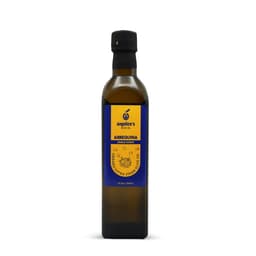
Taste the Difference
Angelica's Organic Extra Virgin Olive Oil
100% Arbequina olives, cold-pressed in California. Small-batch, limited quantity.
Get Your BottleYou Might Also Enjoy

Why Cold-Pressed Olive Oil Tastes Better, and What the Numbers on the Label Actually Mean
Why Cold-Pressed Olive Oil Tastes Better — and What the Numbers on the Label Actually Mean Pick up two bottles of olive oil at the grocery store and you'll...

Why Winter is the Best Time to Taste the Difference in Real Olive Oil
Why Winter is the Best Time to Taste the Difference in Real Olive Oil The days are shorter, the nights are longer, and the air carries a certain crispness...

Winter Warmers: Hearty Recipes Starring Angelica's Olive Oil.
Here's a sample blog post: Winter Warmers: Hearty Recipes Starring Angelica's Olive Oil Winter. The season of cozy blankets, crackling fireplaces, and bowls...