
What 349 mg/kg Polyphenols Actually Means — And Why It Makes Angelica's EVOO Different
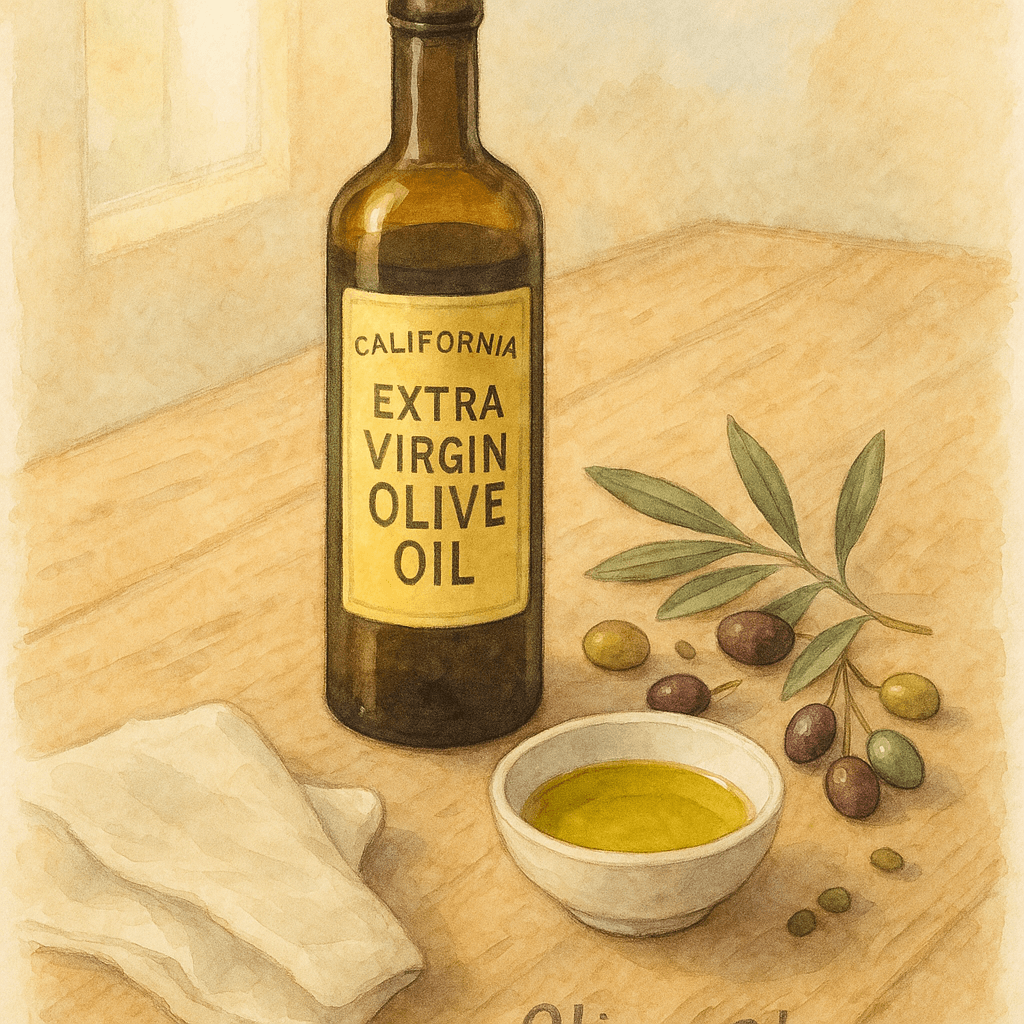
What 349 mg/kg Polyphenols Actually Means — And Why It Makes Angelica's EVOO Different
Most olive oil bottles don't tell you much. You get a country of origin, maybe a harvest date if you're lucky, and a vague promise of "extra virgin quality." So when you see a number like 349 mg/kg polyphenols on a label, it's worth pausing — because that number tells a story that most oils simply can't.
Let's talk about what it actually means, why it matters to you in the kitchen, and how Angelica's California Arbequina EVOO ended up with one of the highest polyphenol counts you'll find on a domestic bottle.
What Are Polyphenols, and Why Does Olive Oil Have Them?
Polyphenols are a broad family of naturally occurring plant compounds. In olive oil, they come almost entirely from the olive fruit itself — specifically from compounds like hydroxytyrosol, oleocanthal, and oleuropein that concentrate during the pressing process.
They're the reason a truly fresh, high-quality EVOO has that characteristic peppery catch at the back of your throat. That little tickle — the one that makes you cough if the oil is especially potent? That's oleocanthal doing exactly what it does in the olive. It's a sign of life.
"Grandma Angelica always said the good oil should have a little bite to it. 'If it doesn't tingle,' she'd tell us, 'it's already tired.'"
Polyphenols are also what give a great EVOO its complexity of flavor — the grassy, fresh-cut notes on the nose, the gently bitter finish that lingers just long enough to remind you that you're eating something real.
Why the Number 349 mg/kg Actually Matters
To understand why 349 mg/kg is meaningful, you need a reference point.
The European Union's health claim regulation (EU 432/2012) sets 250 mg/kg as the threshold at which an olive oil can make a qualified claim about polyphenol content. That's the floor — the minimum for a label to even mention phenolic compounds in a meaningful context.
Angelica's EVOO comes in at 349 mg/kg — nearly 40% above that threshold, and well above what you'd typically find on a supermarket shelf. Standard mass-market EVOOs often test in the range of 50–150 mg/kg. Many don't clear 250 at all.
The difference comes down to a few specific decisions made at every step of production:
- Harvesting early. Polyphenol content peaks when olives are picked slightly underripe, before the fruit fully softens and sweetens. Early harvest means greener oil, more complexity, and a higher phenolic count — along with a lower yield per tree. It's a trade-off we make every year without hesitation.
- Cold-pressing within hours. Heat and time are polyphenols' enemies. Our Arbequina olives go from tree to press within hours of harvest, which locks in the volatile compounds that a longer wait would quietly destroy.
- Small-batch, limited quantity production. When you're not running an industrial facility, you can control every variable — temperature, contact time, storage conditions. Each detail compounds.
What This Means for You in the Kitchen
Here's the honest, practical part: polyphenol count matters most when you're using olive oil raw or as a finishing oil.
High heat degrades polyphenols — so while Angelica's EVOO holds up beautifully for a quick sauté or a light roast, where it truly shines is in applications where the oil's character stays fully intact:
- Drizzled over a finished dish — a bowl of white beans, a piece of grilled fish, a warm slice of crusty bread
- In vinaigrettes and dressings — where you're tasting the oil directly, not cooking it away
- Stirred into soups just before serving — a technique Grandma Angelica used every time she made lentil soup, and one that completely changes a broth
- As a simple dip, with a pinch of good flaky salt and fresh-cracked pepper
Tasting tip: Pour a small amount into a ceramic ramekin and warm it briefly in your hands before tasting. You'll catch grassy, almond-like notes on the nose first, then a clean and slightly buttery taste, and finally that gentle peppery finish at the back of the throat. That full progression — from aroma to finish — is exactly what a 349-polyphenol oil should feel like.
Our 0.14% acidity is the other half of this story. Free acidity is a direct marker of freshness and careful handling — the legal ceiling for the "extra virgin" designation is 0.8%, which means Angelica's sits at less than one-fifth of the allowed maximum. Fresh fruit, cold-pressed promptly, retains more of everything worth keeping.
How to Protect That Polyphenol Count at Home
You've brought home a bottle of high-polyphenol EVOO. Here's how to keep it that way:
Store it away from light and heat. A dark cabinet or a pantry shelf away from the stove is ideal. UV exposure and sustained warmth are the two fastest ways to degrade polyphenols — so the pretty bottle on the sunny windowsill is unfortunately the worst spot for it.
Keep the cap tight. Oxidation happens every time air meets oil. Pour, cap it promptly, and don't let the spout sit open longer than needed.
Use it within 6–8 months of harvest. Even the best EVOO is a fresh, living product with a natural lifespan. Our bottles are dated with harvest information — use that as your guide rather than a generic "best by" window.
Skip the refrigerator if you can. Refrigeration can cause cloudiness and temporarily mute the flavor. If your kitchen runs warm, a short stretch in the fridge is fine — but bring the oil back to room temperature before using and the full character will return.
Whether you're a longtime olive oil enthusiast or someone just starting to look more carefully at what goes into your cooking, polyphenol count is one of the clearest, most verifiable signals of quality available. It's not marketing copy — it's chemistry, confirmed by lab analysis, and it shows up in the flavor every single time you open the bottle.
If you'd like to taste what 349 mg/kg actually feels like on the palate, our small-batch California Arbequina EVOO is available in limited quantities each harvest season. We'd love for it to find a permanent spot on your kitchen shelf.
Salud!
Taste the Difference
Angelica's Organic Extra Virgin Olive Oil
100% Arbequina olives, cold-pressed in California. Small-batch, limited quantity.
Get Your BottleYou Might Also Enjoy
Baking with Olive Oil: How to Substitute Arbequina EVOO for Butter (With Real Ratios and Results)
# Baking with Olive Oil: How to Substitute Arbequina EVOO for Butter (With Real Ratios and Results) Oil-based cakes stay moist three to four days longer than butter-based ones. That's not a marketing

The 2026 Longevity Research on EVOO: What New Clinical Studies Actually Found
# The 2026 Longevity Research on EVOO: What New Clinical Studies Actually Found A multicenter trial published earlier this year tracked 4,800 adults over three years and found a 14–22% reduction in a

Why California EVOO Is More Trustworthy Than Most Imported Bottles (And What the Fraud Data Shows)
# Why California EVOO Is More Trustworthy Than Most Imported Bottles (And What the Fraud Data Shows) Forty-three percent. That's the share of extra virgin olive oils tested by the UC Davis Olive Cent