
Olive Oil vs. Avocado Oil: Which Is Actually Healthier? (An EVOO-First Answer)

Olive Oil vs. Avocado Oil: Which Is Actually Healthier? (An EVOO-First Answer)
Walk down any grocery store aisle and you'll find avocado oil sitting pretty in sleek bottles, marketed as the new gold standard of healthy cooking. It's everywhere — and the claims that come with it are impressive. But here's something Grandma Angelica would have said with a knowing smile: "Not everything that glitters is gold, mija." So let's talk honestly about what's actually in these two oils, where the science stands, and which one deserves the prime spot in your kitchen.
What's Actually in Your Bottle?
Both extra virgin olive oil and avocado oil come from fruits, both are predominantly monounsaturated fats, and both have their place in a healthy kitchen. But when you look beyond the macros, the differences become significant — and they start with polyphenols.
Polyphenols are naturally occurring plant compounds that act as antioxidants. They're part of what gives a high-quality EVOO its characteristic peppery finish — that pleasant, throat-tickling sensation is actually a polyphenol called oleocanthal doing its thing. A quality extra virgin olive oil, like ours, clocks in at 349 mg/kg of polyphenols. Avocado oil? Studies consistently show near-zero phenolic content — it's simply not a meaningful source of these compounds.
That number — 349 mg/kg — isn't just a talking point. The European Food Safety Authority recognizes that olive oils containing at least 250 mg/kg of polyphenols meet the threshold for a qualified health claim related to the protection of blood lipids from oxidative stress. Our oil is comfortably above that line.
Grandma Angelica always said the oil that makes you cough a little is the good stuff. She didn't know the word "oleocanthal," but she knew what quality tasted like.
The Research Behind the Oil
Here's a striking comparison: there are more than 15,000 peer-reviewed studies on extra virgin olive oil and human health. For avocado oil? Fewer than 400. That's not a knock on avocado oil — it's simply a reflection of how much deeper the evidence base runs for EVOO.
The research on high-quality extra virgin olive oil spans cardiovascular function, brain health, gut microbiota, and more. The PREDIMED trial — one of the largest nutrition studies ever conducted — found that a Mediterranean diet enriched with EVOO was associated with significantly better cardiovascular outcomes compared to a low-fat control diet. A 2025 research review reinforced EVOO's role in supporting healthy gut microbiota and immune function through its bioactive compounds, including those same polyphenols.
Avocado oil is rich in oleic acid (the same heart-healthy monounsaturated fat found in olive oil) and vitamin E, which is genuinely valuable. But it doesn't carry the same breadth of bioactive compounds that make extra virgin olive oil such a studied, well-understood ingredient.
One more thing worth knowing: a 2020 study from UC Davis found that over 80% of avocado oils tested had already gone rancid before their best-by date or were adulterated with other oils. That's a quality and traceability problem that well-sourced, small-batch California EVOO simply doesn't have — especially when the oil is cold-pressed within hours of harvest, as ours is, and comes with a verified 0.14% acidity (compared to the 0.8% legal maximum for "extra virgin" labeling).
Flavor, Smoke Point, and When to Use Each
Let's get practical. Both oils have a rightful place in a well-stocked kitchen — the key is knowing which to reach for.
Extra virgin olive oil is at its finest as a finishing oil. Drizzled over warm bread, spooned across a bowl of soup, whisked into a vinaigrette, or swirled into pasta just before serving — this is where EVOO shines brightest. The heat-sensitive polyphenols that make it so valuable are best preserved when the oil never sees a very hot pan. Our Arbequina EVOO has a flavor profile that's buttery and fruity with a mild pepper finish — gentle enough to lift delicate dishes without overpowering them.
Avocado oil has a higher smoke point (around 480–520°F for refined versions), which makes it a more neutral choice for high-heat cooking like searing or roasting at very high temperatures, where you need a fat that won't break down or impart much flavor.
The rule in our kitchen: use your best EVOO where it can actually be tasted, not where it disappears into the heat.
If high-heat searing is most of your cooking, avocado oil earns its place. But for the everyday cooking most of us actually do — simple weeknight meals, fresh salads, good bread — EVOO is exactly where you want to be.
How to Choose a Quality EVOO
If you're buying extra virgin olive oil, a few numbers tell you almost everything:
- Acidity below 0.5% — ideally closer to 0.14%, which signals freshness and careful cold-pressing
- Polyphenol count above 250 mg/kg — this is where the meaningful bioactive compounds live
- Harvest date on the label — not a "best by" date, but an actual harvest date, ideally within the last year
- Single varietal or single origin — this tells you the producer knows their fruit and their process
Angelica's Organic Olive Oil checks every one of those boxes. It's cold-pressed from 100% Arbequina olives grown in California's Central Valley, certified USDA Organic, and produced in small batches with a limited quantity each harvest. When you open a bottle, you'll notice the color — a warm golden-green — and a grassy, fresh aroma that tells you the polyphenols are very much alive and well.
The Honest Answer
Is avocado oil bad for you? Not at all. But "which is healthier" isn't really the right question. The better question is: what are you asking the oil to do?
For raw applications — finishing, dressing, dipping, drizzling — a high-quality extra virgin olive oil with a verified polyphenol count is genuinely hard to beat. The depth of research, the bioactive richness, and the flavor complexity all point in the same direction.
Avocado oil has its moments, particularly when you need a neutral fat at very high heat. But for most of the cooking most of us do, EVOO is the one worth investing in.
If you'd like to taste what 349 mg/kg of polyphenols actually feels like on the palate — that warm, golden pour and the gentle pepper finish — our small-batch Arbequina EVOO is available while our current harvest lasts.
Salud!
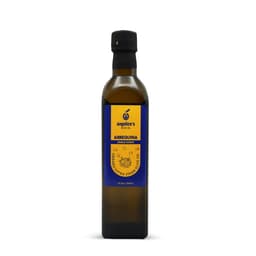
Taste the Difference
Angelica's Organic Extra Virgin Olive Oil
100% Arbequina olives, cold-pressed in California. Small-batch, limited quantity.
Get Your BottleYou Might Also Enjoy
Baking with Olive Oil: How to Substitute Arbequina EVOO for Butter (With Real Ratios and Results)
# Baking with Olive Oil: How to Substitute Arbequina EVOO for Butter (With Real Ratios and Results) Oil-based cakes stay moist three to four days longer than butter-based ones. That's not a marketing

The 2026 Longevity Research on EVOO: What New Clinical Studies Actually Found
# The 2026 Longevity Research on EVOO: What New Clinical Studies Actually Found A multicenter trial published earlier this year tracked 4,800 adults over three years and found a 14–22% reduction in a

Why California EVOO Is More Trustworthy Than Most Imported Bottles (And What the Fraud Data Shows)
# Why California EVOO Is More Trustworthy Than Most Imported Bottles (And What the Fraud Data Shows) Forty-three percent. That's the share of extra virgin olive oils tested by the UC Davis Olive Cent