
Baking with Olive Oil: How to Substitute Arbequina EVOO for Butter (With Real Ratios and Results)
Baking with Olive Oil: How to Substitute Arbequina EVOO for Butter (With Real Ratios and Results)
Oil-based cakes stay moist three to four days longer than butter-based ones. That's not a marketing claim — it's fat chemistry. Butter is roughly 15–18% water, which evaporates in the oven and gradually dries the crumb as the bake cools. Olive oil is nearly pure fat. No water loss means no dryness, and that moisture advantage compounds over time rather than fading.
The question most home bakers have isn't whether olive oil can replace butter. It's which olive oil to use — and what actually happens to flavor and texture when it does.
The Arbequina Advantage: Why Varietal Matters in the Bowl
Not every olive oil belongs in a cake. A bold, grassy Picual or a high-bitterness Koroneiki can overpower delicate batters — their intensity reading as an unpleasant edge against sweet doughs. Arbequina is the exception. It's the mildest major cultivar available: fruity without sharpness, with quiet notes of green banana, fresh-cut almond, and a soft pepper finish that disappears entirely into a warm bake.
That mild, buttery character isn't accidental. Arbequina olives are smaller and naturally lower in bitter secoiridoid compounds than most Mediterranean varieties. In a batter, those qualities translate into a background richness that complements rather than competes — you taste what you're baking (lemon, vanilla, dark chocolate), plus a round, full-fat depth that's hard to achieve with butter at the same moisture level.
Baker's note: Avoid anything labeled "light olive oil" in baking. That designation refers to flavor and color — achieved through heavy refining that strips the oil of its varietal character entirely. You'd get the fat without the flavor. Use real, cold-pressed EVOO, and choose a mild varietal for the best results.
The Substitution Ratios That Actually Work
The standard conversion is ¾ cup of olive oil for every 1 cup of butter — equivalently, 3 tablespoons per ¼ cup. This holds reasonably well across most recipes. But the practical reality is more textured than a single number suggests.
Here's how to think through it by bake type:
Cakes and quick breads — Start with the ¾ conversion. The batter will look slightly looser than a butter-based version; that's correct. Don't compensate by reducing liquid until you've seen a baked result. Bakers who rush to adjust usually end up with a dense, gummy crumb.
Muffins — Olive oil excels here. The formula holds exactly. The tender, tight crumb muffins get from creamed butter (which traps air) isn't the goal in a muffin anyway. An oil-based muffin is moister, denser in the best sense, and travels better in a lunch box or on a picnic.
Brownies and fudgy bars — This is where olive oil can genuinely outperform butter. The fudgy texture everyone chases comes from a high fat-to-flour ratio with minimal gluten development. Olive oil delivers that while adding a barely perceptible fruitiness that cuts through dark chocolate in a way butter rarely manages.
Cookies — The trickiest conversion. Butter contributes structure through creaming, and its water drives steam that helps cookies rise and spread predictably. Olive oil makes cookies flatter, chewier, and crisper at the edges. That's not wrong — it's just different. Expect a result closer to a Roman-style biscotto than a classic thick American chocolate chip. Decide if that's what you want before you start.
Pie crusts and flaky pastry — Don't substitute here. Flakiness depends on cold solid butter melting during baking to create steam pockets inside the dough. Olive oil will produce a cohesive, short-textured shell (excellent for a tart, actually), but not the laminated, shatteringly flaky result. Use it intentionally or not at all.
What Changes in the Bake — And What Gets Better
Three things shift when you trade butter for olive oil:
1. Texture becomes silkier. Olive oil cakes have a closer, more velvety crumb than their butter counterparts. The texture is often compared to a well-made French gâteau — dense in the best sense, with a moist pull when you press the slice. Guests who aren't told often assume there's sour cream or yogurt in the recipe.
2. Flavor gains a second dimension. Butter is rich and largely neutral with a faint dairy tang. Arbequina EVOO brings a layered fruitiness — green, lightly sweet, with a whisper of almond — that adds depth without announcing itself. A lemon olive oil cake actually tastes more lemony, because the oil carries and amplifies citrus volatiles in the crumb.
3. Shelf life extends. Oil-based cakes are noticeably better on day two than day one. The fat continues to distribute through the crumb as it rests, and the moisture stays locked in. If you're baking for a dinner party or a weekend gathering, this is a practical advantage: the cake improves while you're doing other things.
What you lose is the deep Maillard browning on the crust that milk proteins in butter produce. Olive oil cakes go golden, but they won't develop the same caramelized exterior a butter cake does. For most applications, it's a minor trade-off given the gains in crumb and longevity.
Three Dishes Worth Starting With
If you're new to baking with olive oil, these three are reliable entry points:
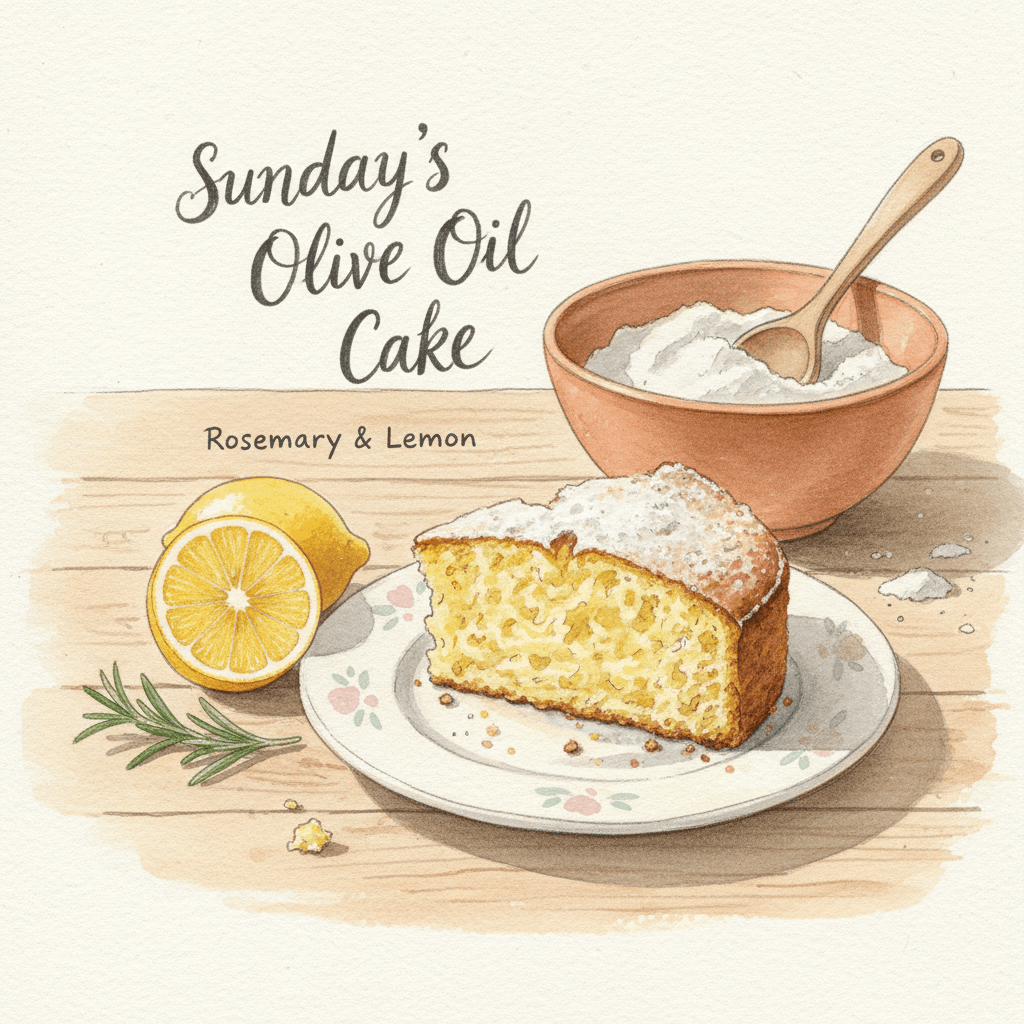
- A simple lemon olive oil cake. Four eggs, 1 cup sugar, ¾ cup Arbequina EVOO, juice and zest of two lemons, 1½ cups all-purpose flour, 1 teaspoon baking powder, a pinch of salt. Bake at 350°F for 35 minutes. This is the cake Grandma Angelica made without measuring — and the ratios still work even when you skip the measuring cups.
- Olive oil brownies. Substitute olive oil directly for melted butter. Add a pinch of flaky salt on top and a small handful of chopped walnuts. The Arbequina fruitiness cuts through dark chocolate with a clarity that butter doesn't achieve.
- Rosemary and orange muffins. A teaspoon of finely chopped fresh rosemary, the zest of one orange, ¾ cup EVOO. Savory-adjacent and genuinely surprising to people who don't know what's in them.
In all three cases: use your best oil. A fresh, cold-pressed, varietal-honest EVOO will make a perceptibly better baked good than a stale, blended bottle from the back of the pantry. The flavor you start with is the flavor that lives in the crumb.
A Practical Checklist Before You Substitute
Run through these before you adapt any recipe:
- Is the butter melted in the original? If yes, olive oil is a near-direct swap. If the butter is creamed with sugar, you'll lose air incorporation — the bake will be slightly denser, which is usually fine.
- Is the recipe relying on butter for flakiness? (Croissants, puff pastry, classic pie crusts) — don't substitute.
- What's the dominant flavor? Mild profiles — lemon, honey, vanilla, almond — welcome Arbequina's fruitiness. Intensely spiced batters (heavy cinnamon, cardamom) will mask it, which is fine, but a neutral oil works just as well there.
- Are you open to a denser crumb? If yes, proceed. If the recipe needs light, airy lift, butter is still the better tool.
The bakers who get frustrated with olive oil substitutions are almost always the ones who expected identical results. Olive oil isn't a drop-in replacement that mimics butter exactly — it's an upgrade in the categories where it wins, and a genuinely different aesthetic in the categories where it doesn't. Understand that distinction, and you'll bake more intentionally with both.
Salud!
Taste the Difference
Angelica's Organic Extra Virgin Olive Oil
100% Arbequina olives, cold-pressed in California. Small-batch, limited quantity.
Get Your BottleYou Might Also Enjoy

The 2026 Longevity Research on EVOO: What New Clinical Studies Actually Found
# The 2026 Longevity Research on EVOO: What New Clinical Studies Actually Found A multicenter trial published earlier this year tracked 4,800 adults over three years and found a 14–22% reduction in a

Why California EVOO Is More Trustworthy Than Most Imported Bottles (And What the Fraud Data Shows)
# Why California EVOO Is More Trustworthy Than Most Imported Bottles (And What the Fraud Data Shows) Forty-three percent. That's the share of extra virgin olive oils tested by the UC Davis Olive Cent

How to Use EVOO as a Finishing Oil (And Why Your Best Bottle Should Never Touch High Heat)
# How to Use EVOO as a Finishing Oil (And Why Your Best Bottle Should Never Touch High Heat) A 2022 study published in *Antioxidants* found that heating EVOO to 180°C (356°F) for just 25 minutes redu