
How to Use EVOO as a Finishing Oil (And Why Your Best Bottle Should Never Touch High Heat)

How to Use EVOO as a Finishing Oil (And Why Your Best Bottle Should Never Touch High Heat)
A 2022 study published in Antioxidants found that heating EVOO to 180°C (356°F) for just 25 minutes reduced its total polyphenol content by up to 40%. Pan-sauté temperatures routinely hit 375–400°F. That means every time you reach for your best bottle to start a sofrito, you're cooking off the compounds that justify the price tag — and replacing them with nothing.
This is the finishing oil argument, and it's not about being precious with your pantry. It's about using the right tool for the right job.
What "Finishing Oil" Actually Means
A finishing oil goes on after the heat is off. It's the drizzle over a finished pasta before it goes to the table, the pour across a warm bowl of soup, the thread you pull across a plate of sliced stone fruit and burrata. No pan involved. No sizzling. No smoke.
The distinction matters because high heat and premium EVOO work against each other in two specific ways.
Polyphenol degradation. The bioactive compounds in high-quality EVOO — oleocanthal, oleacein, hydroxytyrosol — are heat-sensitive. These are the same compounds that cause the peppery throat-catch you feel when you slurp a good oil straight. They don't survive sustained high heat intact. If you've invested in an oil that tests at 349 mg/kg polyphenols (well above the EU's 250 mg/kg health-claim threshold), you want those compounds in your food, not disappearing into the ventilation fan.
Flavor volatilization. The fresh, grassy, almond-and-green-apple aroma of a great Arbequina evaporates quickly when heated. What remains after 10 minutes in a hot pan is largely neutral fat. Perfectly fine for cooking — but it's not what you paid for.
Use a good-value refined olive oil or avocado oil for any cooking that involves sustained heat above 350°F. Save your single-estate EVOO for the finish.
Why Arbequina Works So Well Raw
Not every EVOO makes an equally good finishing oil. Robust varietals — Coratina, Picual, early-harvest Tuscan blends — bring strong bitterness and a lingering peppery finish. They're outstanding, but intense. A few drops can dominate a dish if you're not careful.
Arbequina sits on the lighter end of the intensity spectrum. It's fruity and buttery, with a mild pepper finish and hints of almond and fresh-cut grass. That profile makes it a genuinely versatile finishing oil — one that amplifies a dish rather than arguing with it.
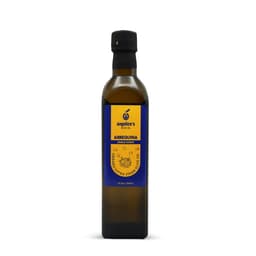
Angelica's California Arbequina, harvested in November 2025 and cold-pressed within hours of picking, runs at 0.14% acidity. For context: the legal maximum for an extra virgin designation is 0.8%. The lower the acidity, the fresher the fruit at press time. That freshness carries through directly into flavor — clean, bright, no off-notes. You taste it most clearly when the oil goes on raw, exactly as a finishing oil should.
Eight Dishes Where a Final Drizzle Makes the Real Difference
This isn't a comprehensive list. It's the shortlist — the situations where a small pour of good EVOO does the most work.
1. Pasta, right before plating. Remove the pan from heat. Add a tablespoon of EVOO. Toss to coat. The oil emulsifies with any residual pasta water into a light, glossy sauce. Don't skip this step.
2. Warm soups and purees. A swirl of oil on a bowl of white bean soup or roasted tomato bisque adds richness and depth that no amount of salt alone can replicate. The contrast of warm soup and room-temperature oil is part of the effect.
3. Grilled fish. Drizzle over fish the moment it comes off the grill, while the surface is still hot enough to absorb the oil without cooking it. This is where Arbequina's mild, buttery character does its best work — complementing rather than masking the fish.
4. Burrata and fresh mozzarella. A pool of good EVOO under — and over — pulled-curd cheese is one of the simplest, most satisfying things you can put on a table. The oil needs no competition. Flaky salt, a crack of pepper, torn basil.
5. Roasted vegetables. Toss in a neutral oil before roasting. Add a finishing drizzle after. Two different oils, two different jobs. The finishing pour adds the brightness that high-heat roasting strips away.
6. Eggs. Pour EVOO into a cold pan, crack eggs in, bring heat up slowly, pull at the first sign of set, drizzle more oil directly over the yolks just before serving. The Spanish method produces eggs that are hard to improve on.
7. Bread and flaky salt. No recipe required. Shallow bowl, two tablespoons of EVOO, a pinch of flaky sea salt, good bread. This is also the most useful way to actually taste an oil on its own terms before committing it to a dish.
8. Fresh fruit and aged cheese. Sliced stone fruit — peach, nectarine, plum — with aged manchego or fresh ricotta and a generous drizzle of Arbequina. Sounds unlikely. Works completely.
Taste It Before You Use It
Before committing a new bottle to any of the above, pour about a tablespoon into a small glass. Warm it in your palm for 30 seconds. Smell it — grass, green tomato, stone fruit, or almond, depending on harvest timing and varietal. Slurp it in with a little air across your tongue. Wait for the peppery catch at the back of your throat. That's the polyphenols announcing themselves.
If you don't taste much — no aroma, no pepper, no character — either the oil is old or it wasn't great to start with. Great EVOO has a point of view. Our November 2025 small-batch harvest lands at 349 mg/kg polyphenols; the pepper finish is present and the fruity brightness is immediate. You'll notice both.
The finish is also exactly the right word for when to use it. Cook with what makes sense. Finish with what's best.
Salud!
Taste the Difference
Angelica's Organic Extra Virgin Olive Oil
100% Arbequina olives, cold-pressed in California. Small-batch, limited quantity.
Get Your BottleYou Might Also Enjoy
Baking with Olive Oil: How to Substitute Arbequina EVOO for Butter (With Real Ratios and Results)
# Baking with Olive Oil: How to Substitute Arbequina EVOO for Butter (With Real Ratios and Results) Oil-based cakes stay moist three to four days longer than butter-based ones. That's not a marketing

The 2026 Longevity Research on EVOO: What New Clinical Studies Actually Found
# The 2026 Longevity Research on EVOO: What New Clinical Studies Actually Found A multicenter trial published earlier this year tracked 4,800 adults over three years and found a 14–22% reduction in a

Why California EVOO Is More Trustworthy Than Most Imported Bottles (And What the Fraud Data Shows)
# Why California EVOO Is More Trustworthy Than Most Imported Bottles (And What the Fraud Data Shows) Forty-three percent. That's the share of extra virgin olive oils tested by the UC Davis Olive Cent