
How to Read an Olive Oil Label (And Why Most People Get It Wrong)
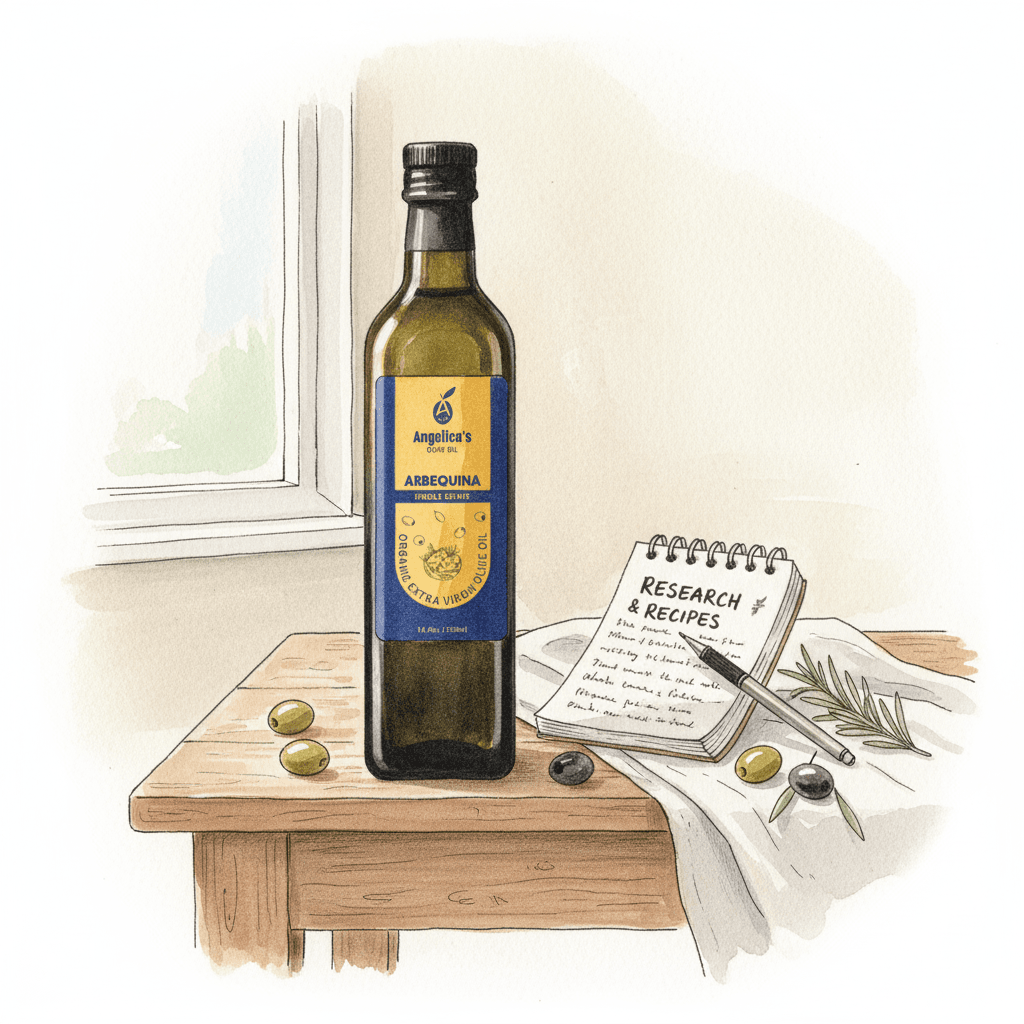
How to Read an Olive Oil Label (And Why Most People Get It Wrong)
The bottle in your pantry probably says "extra virgin." That label gets you almost nowhere. Research by the UC Davis Olive Center found that more than 70% of imported "extra virgin" olive oils sold in the U.S. failed the sensory or chemical standards required to legally carry that designation. The phrase is true in the loosest sense. The oil behind it may not be what you think.
Three numbers on a label will tell you more about quality than any marketing phrase ever will: acidity, polyphenol count, and harvest date. Most bottles omit at least one. Knowing what each means — and understanding what's missing when it isn't there — changes how you shop for good.
The Three Numbers That Actually Matter
Acidity (%) measures the level of free fatty acids in the oil, expressed as a percentage of oleic acid. The legal ceiling for extra virgin designation is 0.8%. That sounds tight until you realize a bottle sitting at 0.79% is barely hanging onto its certification, while one at 0.14% was pressed quickly, from healthy fruit, with careful handling every step after.
Acidity climbs when olives are damaged, overripe, or left sitting too long before milling. A low number is a proxy for speed: fast harvest, fast milling, no shortcuts. Our California Arbequina is cold-pressed at 0.14% — five times below the legal threshold, and it doesn't land there by accident.
Industry note: The International Olive Council (IOC) sets the 0.8% federal ceiling, but stricter regional programs exist. The California Olive Oil Council (COOC) requires 0.5% or below for its certified extra virgin seal. Look for that gap between standard and premium.
Polyphenol count (mg/kg) is the number that matters most for flavor depth and long-term quality, and it's the one almost no mass-market bottle prints. Polyphenols are the bioactive compounds responsible for that peppery throat catch and front-palate bitterness that good EVOO delivers. They degrade with time, heat, and UV exposure.
The EU's health claim threshold — the level at which an olive oil can legally reference cardiovascular benefits under Regulation 432/2012 — is 250 mg/kg. Most supermarket EVOOs arrive on shelves testing somewhere between 50–180 mg/kg: partly because they're multi-source blends, partly because the oil may be many months old before it's poured. Our November 2025 harvest tested at 349 mg/kg — well above that threshold, and the kind of figure only achievable with single-variety fruit, rapid processing, and dark-glass storage from day one.
When a brand can print a polyphenol number, they usually will. When it's absent, that absence is information.
Harvest date is different from the "best by" date, and the gap between the two matters. A "best by" date is manufacturer-set, often stretching two years from bottling — which tells you nothing about when the olives were pressed. A harvest date tells you everything. Volatile aromatics and polyphenols begin degrading the moment milling is complete. An oil harvested in November 2025 and used by summer 2026 is a young, vibrant oil. The same oil, if it sat in a warehouse for eighteen months before bottling, is a different product entirely.
If only a "best by" date is visible, subtract two years to estimate the harvest window. That math is imprecise, but it's better than nothing.
What "Extra Virgin" Actually Requires — and Where the Gaps Are
Extra virgin is a legal grade. Under IOC standards and USDA guidelines, it requires:
- Free acidity below 0.8%
- Peroxide value below 20 mEq O₂/kg
- Passing sensory evaluation: no rancidity, no fusty off-notes, no winey or vinegar character
- A positive fruitiness score on the sensory panel
The problem is enforcement. In the U.S., producers largely self-certify before oil reaches store shelves. Third-party programs like the COOC and the North American Olive Oil Association (NAOOA) run independent compliance testing — but participation is voluntary.
When you see a COOC seal or a USDA Organic certification, those are meaningful signals. The COOC standard uses 0.5% acidity as its floor, requires annual testing, and pulls bottles from retail for spot-checks. USDA Organic covers the entire growing chain — no synthetic pesticides, no prohibited inputs from grove to bottle.
Neither certification is required. When they're present on a label, it signals a producer willing to subject their oil to outside scrutiny.
What "Single-Estate" Means (And Why It's More Than Marketing)
Blending isn't inherently a problem in every food category. But in olive oil it often signals a specific reality: the oil was assembled from multiple sources — potentially across multiple countries — to hit a consistency target and a price point. Under EU regulations, oil can be labeled by its bottling country, not its origin country. A bottle that says "Packaged in Italy" might legally contain olives from Tunisia, Greece, Morocco, or Spain.
Single-estate means the olives came from one place — one grove, one soil type, one growing season. There's traceability and accountability, with a clear line from tree to bottle. When a label says "California" and names the estate, that's the full story. When it says "Mediterranean blend," traceability ends at the filling line.
A Quick Label Checklist for Your Next Purchase
When you're at the shelf or shopping online, scan for these six things:
- Acidity printed on label — below 0.8%; below 0.3% is premium territory
- Harvest date (not just "best by") — within the past 12–18 months is ideal
- Polyphenol count — above 250 mg/kg if printed; a missing number is its own signal
- Single origin — one country, one region, ideally one named estate
- Third-party certification — COOC seal, USDA Organic, or an equivalent independent program
- Varietal named — Arbequina, Picual, Koroneiki: a named cultivar signals intentionality and traceability
No label hits all six perfectly. But the more boxes checked, the more likely the oil in that bottle was handled with care from harvest to your kitchen.
We try to make every one of those boxes easy to check: 0.14% acidity · 349 mg/kg polyphenols · November 2025 harvest · 100% California Arbequina · USDA Organic · single-estate. Everything on the label. Nothing hidden behind vague language.
That's the standard worth holding every bottle to.
Salud!
Taste the Difference
Angelica's Organic Extra Virgin Olive Oil
100% Arbequina olives, cold-pressed in California. Small-batch, limited quantity.
Get Your BottleYou Might Also Enjoy
Baking with Olive Oil: How to Substitute Arbequina EVOO for Butter (With Real Ratios and Results)
# Baking with Olive Oil: How to Substitute Arbequina EVOO for Butter (With Real Ratios and Results) Oil-based cakes stay moist three to four days longer than butter-based ones. That's not a marketing

The 2026 Longevity Research on EVOO: What New Clinical Studies Actually Found
# The 2026 Longevity Research on EVOO: What New Clinical Studies Actually Found A multicenter trial published earlier this year tracked 4,800 adults over three years and found a 14–22% reduction in a

Why California EVOO Is More Trustworthy Than Most Imported Bottles (And What the Fraud Data Shows)
# Why California EVOO Is More Trustworthy Than Most Imported Bottles (And What the Fraud Data Shows) Forty-three percent. That's the share of extra virgin olive oils tested by the UC Davis Olive Cent